
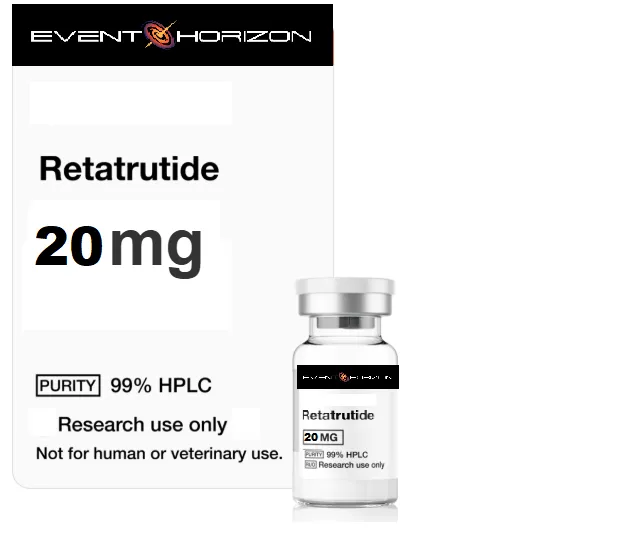
Retatrutide
What it is:
Retatrutide is a GGG tri-agonist that targets GLP-1 and GIP receptors, akin to standard GLP-1 agonists, but also uniquely activates the glucagon receptor. This extra receptor interaction enhances glucagon production, leading to the breakdown of stored fats and glycogen, thereby increasing basal metabolism for more consistent fat loss. Its actions on GLP-1 and GIP receptors promote delayed gastric emptying and appetite control, offering a comprehensive approach to obesity research distinct from older GLP-1 agonists.
Practical Applications:
Retatrutide serves patients with severe obesity (BMI >40) or those who have plateaued on the 10mg dose and need additional therapeutic intensity to continue progressing toward weight loss goals. Bariatric surgery candidates use the higher dose as a pre-operative intervention to reduce surgical complications and improve outcomes, with some achieving sufficient weight loss to avoid surgery altogether. Individuals with significant metabolic dysfunction requiring aggressive intervention - such as those with severe type 2 diabetes, fatty liver disease, and multiple obesity-related comorbidities.
Medical weight loss programs prescribe this dose for patients who demonstrated good tolerance at lower doses but need stronger metabolic effects to overcome biological resistance. The higher dose is also utilized by individuals who have 100+ pounds to lose and need maximum therapeutic support to achieve life-changing weight transformation.
The Science:
Retatrutide provides therapeutic intensity while maintaining the same triple-agonist mechanism targeting GLP-1, GIP, and glucagon receptors simultaneously. Clinical dose-response studies demonstrated that higher Retatrutide doses produce proportionally greater weight loss, with the 12mg dose producing 24% body weight reduction compared to 17.5% at lower doses.
The increased dose amplifies all three receptor activation pathways: enhanced GLP-1 stimulation produces stronger appetite suppression and greater reduction in food intake, increased GIP activation improves insulin secretion and glucose metabolism more significantly, while higher glucagon receptor stimulation promotes greater energy expenditure and fat oxidation. The pharmacokinetics remain favorable with once-weekly dosing, as the higher concentration maintains therapeutic levels throughout the dosing interval while sustaining the synergistic triple-pathway mechanism that makes Retatrutide superior to single or dual-agonist medications.
Summary of Benefits:
Retatrutide delivers maximum weight loss potential for individuals requiring intensive therapeutic intervention, with the capacity to produce 25%+ body weight reduction in clinical responders. This provides more powerful appetite suppression and food intake reduction, making it easier to maintain significant caloric deficits necessary for substantial weight loss. Enhanced metabolic effects include superior glycemic control for diabetic patients, greater improvements in insulin sensitivity, more favorable lipid profile changes, and stronger cardiovascular risk reduction. The dose is particularly effective for patients with biological resistance to weight loss, those who have plateaued on lower doses, and individuals with severe obesity requiring maximum therapeutic support. Benefits include more rapid initial weight loss, better maintenance of metabolic improvements, and comprehensive optimization of multiple metabolic parameters simultaneously through the triple-agonist mechanism.