
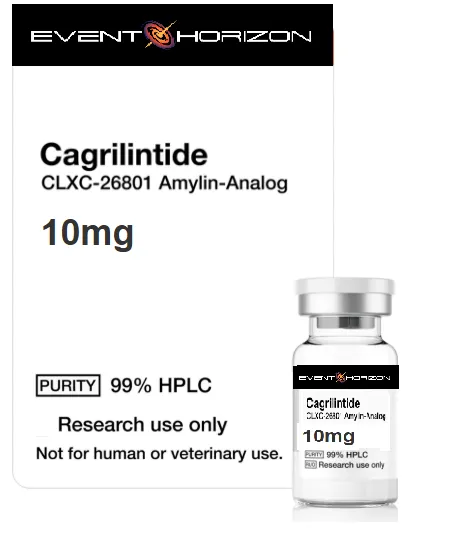
Cagrilintide
What it is:
Cagrilintide is a long-acting acylated amylin analogue peptide that mimics and enhances the natural effects of amylin, a hormone co-secreted with insulin from pancreatic beta cells. This synthetic peptide acts as a potent dual agonist at both amylin and calcitonin receptors, promoting significant appetite suppression, delayed gastric emptying, and improved metabolic regulation. Cagrilintide reduces food intake by signaling satiety to the brain, slows the rate at which nutrients enter the bloodstream, and helps regulate glucose homeostasis through multiple complementary mechanisms. With its extended half-life enabling once-weekly dosing, Cagrilintide represents an advanced metabolic peptide that addresses weight management through physiological appetite control rather than stimulant-based mechanisms. The peptide demonstrates remarkable efficacy in reducing body weight, improving glycemic control, and enhancing overall metabolic health markers.
Practical Applications:
Cagrilintide is utilized by individuals pursuing significant weight loss who have struggled with conventional diet and exercise approaches, particularly those with 30+ pounds to lose, with clinical data showing average weight reductions of 10-15% of body weight over 6-month protocols. Metabolic health optimization seekers, including those with prediabetes, insulin resistance, or metabolic syndrome, incorporate Cagrilintide to improve glucose regulation, reduce HbA1c levels, and address underlying metabolic dysfunction beyond simple calorie restriction. Athletes and fitness competitors in weight-class sports use Cagrilintide during cutting phases to control appetite while preserving lean muscle mass, as the peptide's mechanism doesn't interfere with protein synthesis or recovery processes. Individuals who have plateaued on other GLP-1 therapies (like semaglutide or tirzepatide) add Cagrilintide for synergistic effects, as the dual amylin-calcitonin receptor activation provides complementary appetite suppression through different neural pathways. Medical weight management clinics prescribe Cagrilintide for patients with obesity-related comorbidities including type 2 diabetes, hypertension, and fatty liver disease, where substantial weight loss produces measurable improvements in disease markers. Post-bariatric surgery patients sometimes utilize Cagrilintide to maintain weight loss and control appetite during maintenance phases. The peptide is typically administered once weekly via subcutaneous injection, with gradual dose escalation protocols to minimize gastrointestinal side effects.
The Science:
Cagrilintide is a synthetic analogue of human amylin (also called islet amyloid polypeptide or IAPP), a 37-amino acid peptide hormone naturally produced by pancreatic beta cells. The peptide has been structurally modified with acylation and amino acid substitutions to extend its half-life to approximately 7 days, enabling once-weekly administration while maintaining potent biological activity. Cagrilintide functions as a dual agonist, activating both amylin receptors (AMY1-3) and calcitonin receptors in the brain's area postrema and nucleus tractus solitarius—regions critical for appetite regulation and satiety signaling. The peptide's weight loss effects occur through multiple mechanisms: it slows gastric emptying (reducing the rate at which food enters the small intestine), promotes satiety by activating brainstem neurons that signal fullness, reduces food reward signaling in mesolimbic dopamine pathways, and decreases overall caloric intake without requiring conscious calorie restriction. Clinical trials demonstrate that Cagrilintide produces dose-dependent weight loss, with higher doses (2.4mg weekly) achieving 10-11% body weight reduction over 26 weeks in obesity patients. When combined with GLP-1 receptor agonists like semaglutide, Cagrilintide shows synergistic effects, with combination therapy producing up to 17% body weight loss—significantly exceeding either peptide alone. Beyond weight loss, Cagrilintide improves glycemic control by reducing postprandial glucose excursions, lowering fasting glucose levels, and decreasing HbA1c in diabetic populations. The peptide also influences bone metabolism through calcitonin receptor activation, though long-term skeletal effects require further research. Cagrilintide's safety profile in clinical trials shows generally mild-to-moderate side effects, primarily gastrointestinal (nausea, vomiting, constipation) that typically diminish with continued use and proper dose titration.
Summary of Benefits:
Cagrilintide delivers powerful appetite suppression and significant caloric intake reduction (typically 20-30% fewer calories consumed daily) without reliance on stimulants or willpower, making sustainable weight loss achievable through physiological satiety signals rather than conscious restriction. Weight management benefits include substantial body weight reduction of 10-15% over 6-month protocols, preferential loss of visceral adipose tissue (the metabolically harmful fat around organs), preservation of lean muscle mass during weight loss phases, and sustained weight maintenance when combined with lifestyle modifications. Metabolic health improvements encompass enhanced insulin sensitivity, reduced fasting glucose and HbA1c levels (particularly beneficial for prediabetic and type 2 diabetic individuals), improved lipid profiles with reductions in triglycerides and LDL cholesterol, and potential reversal of non-alcoholic fatty liver disease (NAFLD). Cardiovascular benefits include reduced blood pressure, decreased inflammation markers, and lowered cardiovascular disease risk factors associated with obesity and metabolic dysfunction. Gastrointestinal regulation through controlled gastric emptying helps stabilize blood sugar, reduces postprandial glucose spikes, and promotes more consistent energy levels throughout the day without the crashes associated with rapid carbohydrate absorption. Synergistic combination potential with GLP-1 agonists provides enhanced weight loss effects through complementary mechanisms, offering options for individuals who have plateaued on single-agent therapies. Quality of life improvements include reduced food preoccupation and obsessive eating thoughts, enhanced satiety satisfaction from smaller portions, improved body composition and physical mobility, and psychological benefits from successful weight management. The once-weekly dosing provides convenience and improved adherence compared to daily injection protocols, while the peptide's mechanism of action supports long-term metabolic health rather than temporary cosmetic changes.